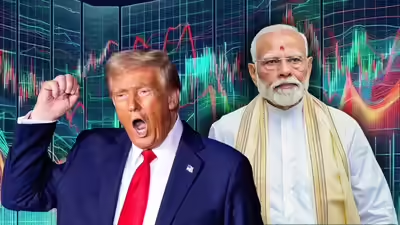

Washington, August 22, 2025 – U.S. President Donald Trump has announced a sweeping new round of tariffs targeting both the European Union and India, marking a major escalation in global trade tensions.
Under the new policy, the U.S. will impose a 15% tariff on most EU imports, including semiconductors, pharmaceuticals, and lumber. At the same time, tariffs on imported automobiles from Europe will be reduced from 25% to 15%, but only after the EU agrees to lower its duties on American industrial and agricultural goods.
In a sharper move, Trump doubled tariffs on Indian imports from 25% to 50%, citing New Delhi’s continued purchase of Russian oil. This decision has already triggered a diplomatic standoff, with India warning of retaliatory measures and exploring closer trade cooperation with China.
According to U.S. Treasury data, tariff revenues hit a record $29 billion in July 2025, pushing total collections for the fiscal year past $158 billion. Analysts project that tariffs could generate $2.9 trillion between 2026 and 2035, though many economists warn of serious long-term consequences.
A recent Penn Wharton study estimates that Trump’s tariff strategy could reduce U.S. GDP by 6% and cut wages by 5% over the long run, with middle-income households facing a lifetime cost of nearly $22,000.
Supporters argue that the tariffs strengthen America’s negotiating position and protect domestic industries. Critics, however, warn that the measures are driving up consumer prices, fueling inflation, and straining U.S. alliances.
With global markets on edge, Trump’s tariff policy is increasingly seen not just as an economic tool but also as a geopolitical weapon—reshaping the U.S.’s role in international trade.